If you’ve been exercising for a while and want a simple way to make your workouts more effective, these key measurements might be exactly what you need.
Understanding Progressive Overload
Progressive overload means gradually increasing the challenge placed on your body, so it continues to adapt and improve in strength, size, or endurance.
For example, if you’re performing bicep curls with 5 kg for 12 reps, over time you’ll want to either:
- Lift more weight, or
- Complete more repetitions
These are two of the most straightforward ways to apply progressive overload, both being equally as effective.
There are other methods—such as improving technique, slower tempo, or shortening rest periods—but starting with weight and reps is the simplest and most measurable approach.
What Should You Track?
A basic workout log can easily become a powerful progress tracker if you record the right information. Here’s what matters most:
- Weight: Track how much you lifted last session. Aim to increase the load slightly when you can perform all target reps with good form.
- Reps: Record how many repetitions you complete. Try to add 1–2 reps next time if you can’t yet increase the weight.
- Volume: This refers to total sets per exercise. Adding extra volume for key muscle groups can lead to greater progress.
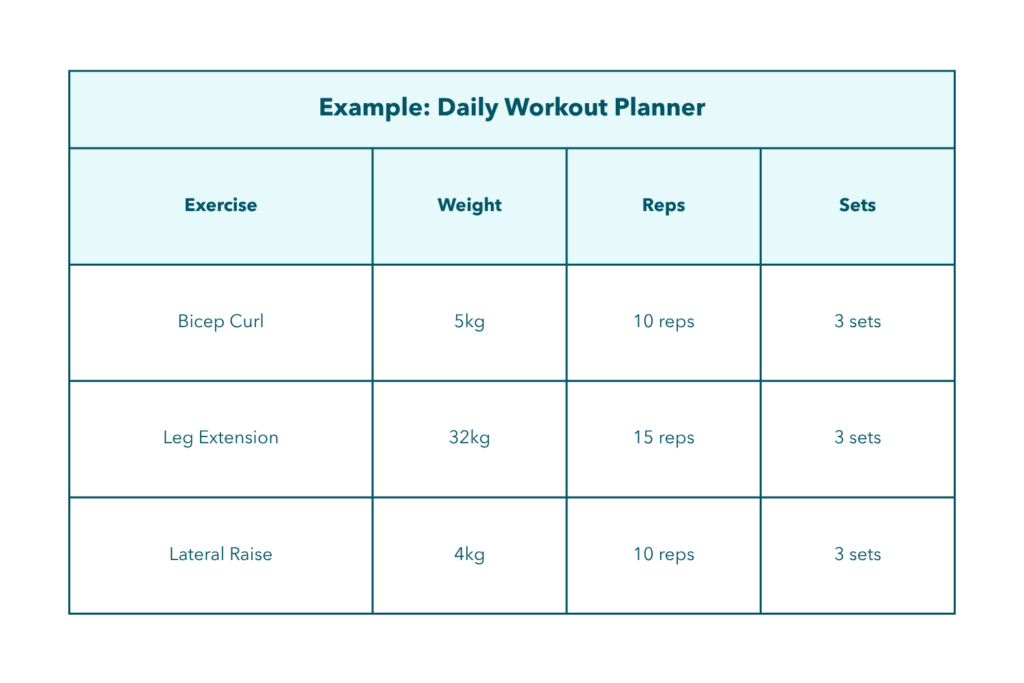
An example workout planner for a day can then look like as follows:
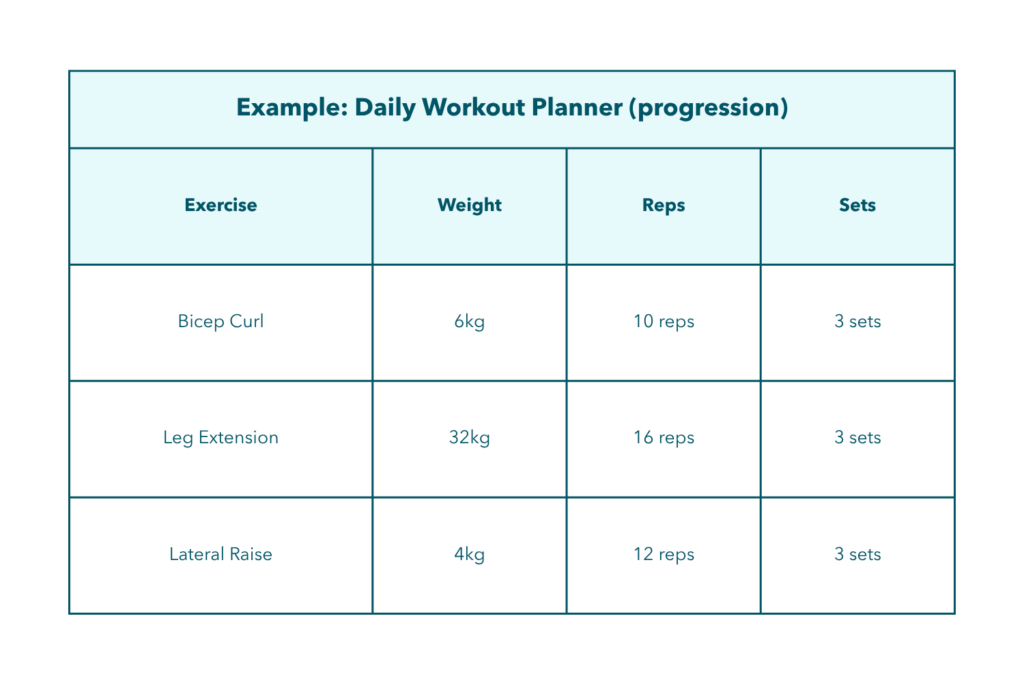
And a progression for the next week, with some exercises increasing in weight, and some in reps:
Final Tip
Tracking progress doesn’t have to be complicated. A simple note in your phone or a small workout notebook is all it takes to make your training more intentional, consistent, and rewarding over time.